The $1,000 hotel night that cost us nothing


 Reading Time: 4 min
The Waldorf Astoria Rome Cavalieri regularly runs close to $1,000 a night. We stayed there anyway, and the room cost us nothing.
That’s the case for co-branded hotel cards in one line. I keep four of them in my wallet — two Marriott, one Hyatt, one IHG — and my wife carries a Hilton card. I barely spend on most of them. I keep them for one thing: the free night certificate each one drops into our accounts every year, either for paying the annual fee or for hitting a spending target.
Here’s what each certificate is good for, and what we've gotten back.
The part of AARP membership that few people talk about

FROM OUR PARTNER AT AARP Most people 50+ join AARP for discounts on hotels, rental cars, dining, eyewear, insurance, and plenty of things you already buy. What you're actually supporting in AARP is an organization working on your behalf in Washington, all 50 states, and U.S. territories: protecting Social Security and Medicare, pushing to lower prescription drug costs, fighting fraud and scams, and supporting family caregivers. Your first full year is $15 with automatic renewal — less than a single airport dinner.
Explore AARP membershipThe case for earning free night certificates
I’ll be the first to admit that co-branded hotel credit cards aren’t the best for your everyday spending. Earning rates are mediocre at best, and hotel points aren’t typically worth as much as airline miles or transferable points. The certificates are a different story.
Each covers one night below a set price ceiling, and each has its own trigger:
- The World of Hyatt Credit Card — any Category 1-4 property, on your cardmember anniversary. A second certificate at $15,000 in spend.
- IHG One Rewards Premier Business Credit Card — any property at 40,000 points or less, on your account anniversary. Top off with unlimited points.
- Marriott Bonvoy Business® American Express® Card — up to 35,000 points, on renewal. Top off with up to 25,000 points.
- Marriott Bonvoy American Express Card — the same 35,000-point night, on a card closed to new applicants.
- Hilton Honors American Express Surpass® Card — almost any Hilton property, at $15,000 in spend.
Six certificates a year across five cards, and in a typical year they have returned well over $1,000 in stays.
The World of Hyatt Credit Card
World of Hyatt is my program of choice, and this is the only hotel card I actively spend on. The elite-qualifying nights it earns count toward re-qualifying for Globalist each year.
The number of Category 1-4 properties has dwindled, but plenty of good ones are left — including stateside. I used my anniversary certificate in April at the Tempe Mission Palms in Arizona, where rooms were going for well over $300 a night. That is more than three times the card's $95 annual fee, from a single night. My second certificate, earned by putting estimated taxes on the card, is booked at the Hyatt Place London City East at around $315 a night.
IHG One Rewards Premier Business Credit Card
I’ve had the IHG One Rewards Premier Business Credit Card in my wallet for just over two years now. Its free night certificate makes the card truly shine.
I most recently used the certificate for a free night at a Holiday Inn Express in Burlington, Vermont, when my wife and I were in the area for a wedding. Rooms cost roughly $250 during our stay, so the certificate alone covered the card’s $99 annual fee.
Two Marriott American Express cards
I carry two Marriott cards, and the certificates are interchangeable — both land at 35,000 points, and both stretch to 60,000 with a top-off. That has covered nights at the JW Marriott Chicago, the Prague Marriott Hotel, and the Dead Sea Marriott Resort & Spa in Jordan. The Business card is the one still open to applicants; the personal version closed years ago and I have held onto it ever since.
Hilton Honors American Express Surpass® Card
While I don’t have the Hilton Surpass card in my wallet, my wife does. The $15,000 threshold is the one we plan around — we route spending to her card deliberately every year to make sure we hit it.
That Rome Cavalieri night from the top of this story came from one of these certificates. At nearly $1,000, it is well outside what we would ever pay in cash.

In case you missed it...
This week's top five travel dealsWhy I renew all five every year
None of these cards will ever be my everyday spending card, and I’ve made peace with that.
I keep them for the certificates, and so far each one has more than covered what it cost me to earn. Before your next renewal, price out one night at a property you’d actually book. If that number clears the annual fee — or beats what $15,000 would have earned you elsewhere — you have your answer.
Keep your items not only germ-free, but organized, too.
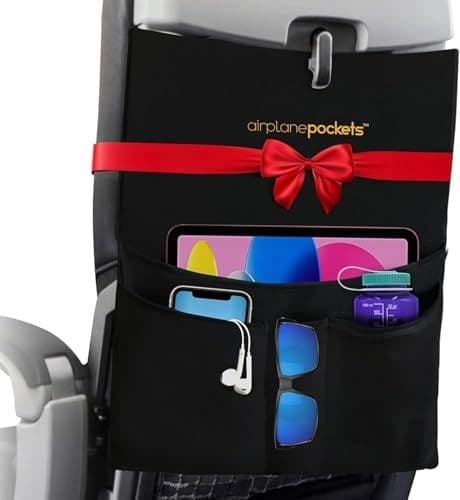
With slots for your electronic devices, water bottle, and snacks, plus a cover for the tray table when it's folded down, you'll never leave anything behind — except those icky germs. And best of all, this reusable organizer is machine washable.
Get it at Amazon