The case for no annual fee credit cards in your points strategy



 Reading Time: 3 min
When premium travel cards with welcome bonuses worth more than a thousand dollars exist, why would you bother with a no annual fee credit card?
Turns out, they can play a pretty important supporting role.
Rewards cards without annual fees are often overlooked due to their more limited perks and rewards, but they can boost your points earning and often pair exceptionally well with more premium cards.
Here’s why they might be worth a closer look for your award travel strategy.

In case you missed it...
Book business class to Europe for just 62,000 milesBetter rewards on everyday spending
One of the biggest benefits of no annual fee credit cards is how they earn rewards on everyday purchases. While premium travel cards often assign their highest rewards rates to travel and dining, many no annual fee cards offer bonus rewards in categories like groceries, gas, and drugstores. These expenses make up a large portion of most household budgets, yet they may not earn the best rewards on high-end travel cards.
Some no annual fee cards even have a flat earning rate structure, meaning you’ll earn the same amount of cash back or points no matter what you purchase. For example, with the Citi Double Cash® Card, you’ll earn 1% cash back when you buy and another 1% back when you pay, no matter what purchase you make. If you often shop at stores that don’t “code” as a bonus category with any of your other credit cards, this gets you a very solid 2x rate on spending that would otherwise just earn you 1x.
Pool rewards with premium travel credit cards
Many no annual fee credit cards also let you pool rewards with premium cards in the same program. For example, you can pool rewards from the Chase Freedom Unlimited® or the Chase Freedom Flex® with the Chase Sapphire Preferred® or Chase Sapphire Reserve® to unlock premium travel redemptions like point transfers to airline and hotel partners.
The same can be said if you want to pair up the no annual fee Citi Strata℠ Card or Citi Double Cash® with the Citi Strata Elite℠ Card, or the Blue Business® Plus Credit Card from American Express with the Amex Business Platinum® Card.
You might use the no annual fee card for groceries or gas and the premium card for travel purchases, then merge all your rewards into your premium account for airline or hotel transfers. Over time, this strategy can boost your total points balance without increasing your out-of-pocket costs.
Unlock more sign-up bonuses over time
No annual fee cards also offer their own sign-up bonuses, which you can earn in addition to bonuses on premium cards. While these bonuses are usually worth less, they’re often easier to justify because there’s no ongoing cost to keep the card.
They also tend to have lower minimum spending thresholds that are easier to meet. For example, the bonus on the Chase Freedom Unlimited® is currently $250 cash back when you spend $500 on purchases within three months of account opening. That translates to 25,000 Chase Ultimate Rewards points if you pool the bonus with a card like the Sapphire Reserve.
19 genius travel finds you didn’t know existed!

With close to a thousand flights under our collective belts, we've experienced it all. But year after year, we’re still finding new items that make traveling significantly easier. The only thing better than discovering a perfect new travel hack is sharing your discovery with friends. So here are our top 19 items for your next trip that you never knew you needed. (But trust us... you do!)
Click here to see our entire listKeep them forever (and strengthen your credit profile)
Perhaps the most important benefit of no annual fee credit cards is the fact you can keep them open indefinitely.
Since there’s zero annual cost to keep these cards open, there’s no pressure to cancel the card if your spending habits or travel goals change. This is especially valuable for your credit score, as the length of your credit history and your total available credit can both impact your FICO credit score in a positive way.
This compact gimbal makes travel vids look pro
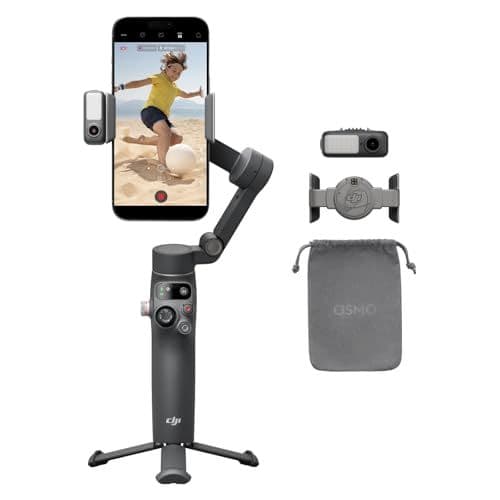
The DJI Osmo Mobile 7P turns your phone into a cinematic camera with 3-axis stabilization, native tracking, and a fill light. It's ideal for capturing steady footage of trips without shaky hands.
Get it at Amazon